Friday, 23 January 2026

Arson Attacks Signal Breakdown in Peace Talks


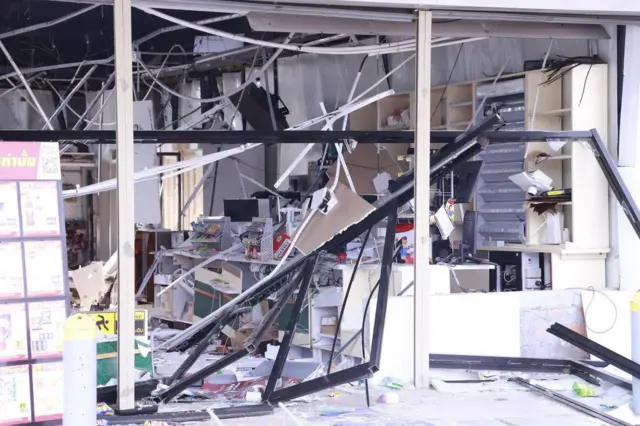
Petrol stations under attack in Thailand's far South. Credit: Royal Thai Army

Don Pathan
www.stratsea.com

Electoral Ambitions vs Security Realities

At the beginning of this year, 11 PTT petrol stations in Thailand’s southernmost border provinces came under simultaneous arson and bombing attacks in the wee hours of Sunday, 11 January 2026.

The country was undergoing preparations on that day for a nationwide poll to elect local administration organisation officials.

Prime Minister Anutin Charnvirakul said the attacks might have been connected to the local elections in this region, which has a history of political violence. Success at the local level can shape national party strategies for the upcoming general election scheduled for 8 February.  

But by afternoon, the National Security Council (NSC) issued a statement saying the spate of attacks had “disrupted the peaceful co-existence of people of all races and faiths in the region, and that it was a clear indication that the responsible party has no legitimacy and is not qualified to claim representation of the people of this area.”

NSC stopped short of directly blaming Barisan Revolusi Nasional Melayu Patani (BRN), the long-standing separatist movement that controls virtually all of the fighters on the ground. NSC maintained that such violence undermined the ongoing peace process and has conveyed its concerns to BRN through the Malaysian government, the designated facilitator for the peace talks.

Official peace talks between Thailand and the Patani Malay separatist movements started in February 2013. The two sides have never moved beyond what they called “confidence-building measures”.

Divergent Visions

A leap of faith was taken at the high-level official meeting in December 2025, in Kuala Lumpur, when chief negotiators of the two sides, after nearly two years of no talks, discussed this flimsy notion of “end state”. It is a loaded term that is supposed to encapsulate how this century-old conflict should be resolved.

The previous government under Paetongtarn Shinawatra refused to engage in any official talks with BRN until the movement ceased violence on the ground. Moreover, her government insisted that BRN must send their military leaders to the table.

The current Thai government resumed the talks. Following the Deember high level official meeting, technical representatives of the two sides came together from  6 to 8 January to continue with the discussion on the end state.

Thailand was not prepared to put all its cards on the table, but BRN spelled out in real terms what this notion means. For the rebels, it means the right to self-government and a mandate to establish a regional assembly so the people of Patani can make their own laws, collect taxes, and run their own schools, although sovereignty will continue to rest with the Kingdom of Thailand.

Obviously, the Thai representatives at the table did not have the kind of mandate to negotiate such a matter. It is way above the negotiators’ pay grade.

Demands for Autonomy

BRN went on to say that agreement on power and resource-sharing will have to be worked out between the two sides; the most disturbing clause is the right to secession. Until then, this historically contested region should be placed under an interim government, a BRN source said.

A Thai government official from the Office of the Prime Minister, speaking on condition of anonymity, said granting BRN – or anybody for that matter – an interim status, or granting the Patani region full autonomy, would require legislation that could be initiated with 10,000 signatures of eligible voters.

But there is no guarantee that Parliament would pass such a law, as it would be political suicide. Political and administrative powers in Thailand are extremely centralised.

Moreover, the Thai public in general is not sympathetic to the plight and grievances of the Malays of Patani.

Thai officials at the January meeting suggested that the Southern Border Provinces Administrative Center (SBPAC), a bloated multi-agency body that focused on development – particularly pilot projects to be handed back to line ministries – could be an entry point for BRN. Needless to say, BRN rejected the offer. The January meeting ended badly.

The Signalling Power of Arson

Three days later, 11 PTT petrol stations and the attached convenience stores across the region were attacked. All fingers pointed to BRN, the usual suspect. 

It is worth noting that BRN does not confirm or deny operations on the ground. BRN fighters operate on autopilot; combatants act independently of their political leaders, who intervene when they deem the fighters have violated ground rules or when coordination is needed. Such an arrangement allows the movement’s political leaders and negotiators plausible deniability.

Thai officials said that instead of reverting to violence to pressure the Thais, BRN needs to think about their long-term goal. They can start with conducting a proper public consultation to gauge whether people in the Patani region support their governance model, which the movement often refers to as “self-government”.

They need to be certain if their model of governance is what the people want, Thai officials said.

The current wave of insurgency violence resurfaced in mid-2001 after a decade of relative calm but was not officially recognised until 4 January 2004, when scores of BRN combatants raided an army battalion and made off with about 350 pieces of military weaponry.

Civilian and soft targets, including public schools and sometimes Buddhist monks and teachers, were targeted in the early phase of this wave of insurgency until local civil society organisations and community leaders stepped up their criticisms against BRN, calling for greater respect for civility and rules of engagement.

Attacks against civilian targets have virtually disappeared, but do happen once in a long while, usually as a stern warning to the Thai security forces. A case in point was the brief but dramatic spike in violence against civilian targets in May 2025, in response to the shooting death of Abdulroning Lateh, a key BRN leader from the military wing. As expected, Thai security forces denied killing Abdulroning.

The Human Cost

While the attackers may not have been after body counts in these recent arson attacks, the 11 petrol stations are nevertheless civilian targets. A local political action group, The Patani, issued a statement calling on all sides to embrace humanitarian principles and to end attacks on civilian targets.

BRN sympathisers often cite economic injustices whenever private businesses come under attack. Artef Sohko, president of The Patani, said the corporate brands of these petrol stations and convenience stores may belong to PTT and 7-Eleven, but the people who suffer most from these attacks are the franchisees, not the corporations themselves. BRN said they felt the Thai side treated them as a “plaything”—throwing out some fancy words, like “end state”, but refusing to elaborate or act on it. They felt the current government resumed talks just for political points. The ongoing violence is a reminder that nothing comes easy in this restive region, where more than 7,700 people have died from insurgency-related violence since January 2004.


The views expressed are those of the authors and do not necessarily reflect those of STRAT.O.SPHERE CONSULTING PTE LTD.

This article is published under a Creative Commons Licence. Republications minimally require 1) credit authors and their institutions, and 2) credit to STRAT.O.SPHERE CONSULTING PTE LTD  and include a link back to either our home page or the article URL.

Author

  • Don Pathan is a security analyst focusing on conflict in Myanmar/Burma and insurgency in Thailand's far south.

Friday, 9 January 2026

The “End State” Deadlock


From left to right, Gen. Sosak Rungsita, Thailand's chief negotiator, Mohd Rabin bin Basir, Malaysian facilitator, and Anas Abdulrohman, lead negotiator of the BRN, at the end of a two-day official meeting in Kuala Lumpur, on Dec. 8, 2025.

Don Pathan
www.stratsea.com

The Deadlock of Divergent Aspirations

On the surface, the statement by the designated Malaysian facilitator for the peace talks sounded promising: Thailand and the rebel Barisan Revolusi Nasional Melayu Patani (BRN) agreed to work towards an “end state”.

The term emerged from decades of establishment officials asking one persistent question: how will this all end?

For BRN, however, the end state means self-government through a regional assembly empowered to draft its own laws and manage local affairs, including taxation, education and power sharing with the central government. Most controversially, they seek the right to secede from the Thai state.

For the Thais, the end state is something that has to be negotiated.

But after more than two decades of on-again, off-again peace talks, the two sides can still find a common ground to guide the peace process toward a meaningful end. The furthest they have progressed is establishing a framework – the so-called Joint Working Group on Peace Process (JCPP) – under which both sides identified three priorities. These are the reduction of violence, public consultation, and a political solution to end the conflict.

Little progress has been made on concrete details, however.

The previous government, under the then prime minister Paetongtarn Shinawatr,a refused to resume talks unless the BRN stopped attacking Thai targets. They also insisted on negotiating only with BRN’s military wing—those who supposedly control combatants on the ground.

BRN countered that violence reduction must be negotiated, and any ceasefire would require monitoring by the international community

Within days of taking power, the government under Prime Minister Anutin Charnvirakul announced the resumption of peace talks. No one was certain what he hoped to achieve, given that he agreed to serve only three months before cutting his term even shorter by dissolving the Parliament to avoid a potentially embarrassing no-confidence debate.

Thai and BRN chief negotiators met briefly in November 2025 to prepare for a high-level official meeting on 8 December in Kuala Lumpur. This time, the term “JCPP” was dropped and replaced with the Peace Dialogue Plan Implementation Framework (PDPIF). The content is more or less the same, but the rebranding creates an impression that Anutin’s camp is pursuing something fresh and new.

Rebranding the Stagnation

“But nothing fundamentally has changed,” said Asmadee Bueheng, a local writer and a close observer of the conflict. “Youth activists still face legal persecution for speaking out, and the controversial Emergency Law remains in place.”

This short-lived new beginning saw the end of the role of five international observers who had been brought in to monitor high-level talks but were never permitted to do much beyond observing. For the December talks, a German conflict expert was brought in as a monitor.

The press statement from Malaysia’s Office of the Facilitator for the southern Thai peace talks contained some promising words. But considering the background and context – how this high-level meeting suddenly materialised after nearly two years of no official talks – it is difficult to feel excited about any claims of success.

There were secret meetings, facilitated by Malaysia, to get BRN to stand down during last year’s Ramadhan (from 1 to 30 March), but Bangkok did not have anything to offer.

While a regional assembly may be too controversial at this juncture, other issues such as the Patani Malay ethno-religious identity, historical narrative and cultural space could have been pushed through to demonstrate the country’s willingness to meet BRN halfway. 

Instead, the Thai side offered nothing new beyond a different chief negotiator and fancy words that confused more than clarified any meaningful intent.

The Living Memory of Tak Bai

BRN combatants, who have been operating on an autopilot mode in which a set of broadly defined rules of engagement are normally observed, are reminded of the Tak Bai massacre in 2004 when 85 young Malay men died at the hands of Thai security forces. As many as 78 of them died from suffocation because they were stacked on top of one another, and seven were shot dead at the protest site.

Tal Bai detainees.

Thailand never made a closure on this incident, as the statute of limitations expired 20 years after the incident, but the security forces continue to pay the price for the incident. The massacre became an important part of the rebels’ narrative.

Based on the public statement released after the December meeting, it appears that the Thai representatives could have taken this chance to respond to the longstanding grievances expressed by BRN and the people of Patani.

In short, the recent high-level meeting itself represents progress only because peace talks had been put off for some time.

But the meeting’s modest output risks creating false hope among local people who want to see meaningful talks resume. It came at a time when Anutin was facing a desperate political situation following poor handling of flooding in the South.

Moreover, his unchecked support for the army over the border clashes with Cambodia could backfire against his mid-size party if the current frantic nationalism loses steam and his base in the northeast begins demanding attention to bread-and-butter issues – or, in their case, rice and fish – as the cost of military operations takes a toll on their livelihoods.

As with the far south conflict, allowing the army to define “national threats” limits the scope of solutions. For more than two decades, this threat perception has confined the peace process to a tiny box of confidence-building measures. It has merely served as a talk shop that never advances because bureaucrats cannot agree on the nature of the violence, much less the needed concession for peaceful coexistence with the Malays of Patani.

Calling it a “conflict” means recognising the historical grievances of the Malay people and legitimising BRN. But calling the combatants anything other than criminals invites counterattacks not just from the hawks but from a public that has long believed official claims that these Melayu fighters are drug-crazed youths who embraced a distorted version of Islam.

The “Criminal” vs “Conflict” Narrative

Yet, even after security officials came to the realisation that they had been barking up the wrong tree – that religion is not the driving force of the struggle, but Malay nationalism – they lacked the political will to explore terms for peaceful coexistence with the Malays. Instead, they relied mainly on military-led counterinsurgency measures.

According to Asmadee, nothing has changed under the current Thai government. The controversial Emergency Law and Martial Law remain in place, and political activists continue facing harassment from security agencies and through judicial channels. Mistrust between the two communities remains high, and an end to the conflict is nowhere in sight.

Moreover, five youth leaders from The Patani, a political action group, face charges of promoting separatism for participating in a public seminar at Prince of Songkhla University’s Pattani Campus, where the issue of rights to self-determination (RSD) was discussed and a mock referendum was conducted.

The participants were asked if they would support a formal referendum on RSD – not independent Patani – if the law permits it. The Fourth Army Area, the command in charge of Thailand’s counterinsurgency in this restive region, was displeased and directed the police to press charges.

Ironically, The Patani is often the group security officials consult – and at times ask to intervene – when addressing extremely sensitive issues with BRN. The Patani criticises all sides – Thai authorities and BRN – when rights are violated, and rules of engagement, civility and humanitarian norms are disrespected.

Anutin will certainly go to the polls in February 202,6 claiming to have accomplished something for the far south—more than the previous government, at least. If his Bhumjaithai Party becomes a coalition member of the next government, the current negotiating team could receive another mandate. Whether they can develop the political courage to be more creative than their predecessors – or convince the conservative establishment to open space for critical dialogue – remains to be seen.

The views expressed are those of the authors and do not necessarily reflect those of STRAT.O.SPHERE CONSULTING PTE LTD.


This article is published under a Creative Commons Licence. Republications minimally require 1) credit authors and their institutions, and 2) credit to STRAT.O.SPHERE CONSULTING PTE LTD  and include a link back to either our home page or the article URL.

  • Don Pathan is a security analyst focusing on conflict in Myanmar/Burma and insurgency in Thailand's far south.

Monday, 5 January 2026

Safe space amid border tensions: Cambodian Muslims in Thailand’s Deep South

By Don Pathan
Prachatai

Korean diplomats visiting Thamvithya Mulnithi School in Yala, Aug. 2023. The school is where the three Cambodian students are studying. (Credit: Don Pathan)


.


When cross-border fighting erupted between Thailand and Cambodia in late July, Hamad Sos received urgent messages from his family in Cambodia encouraging him to come home immediately.

They feared for his safety as anti-Khmer sentiment swept through Thailand during the clashes between the two Buddhist kingdoms over disputed ancient Hindu temples along their undemarcated border.

Yet after eight years of living and studying in Yala, the 20-year-old considers this city his second home. A student at Thamavitya Mulniti School, Hamad is nearing completion of the Tahfiz Science Programme, the rigorous and systematic process of memorizing the entire Quran.

His academic journey will next take him to Al-Azhar University in Cairo, Egypt, one of the world's premier institutions for Islamic scholarship.

Though his Tahfiz Science classes are taught in Arabic, Hamad found learning the local Malay dialect surprisingly easy. His native Cham language and Bahasa Melayu belong to the same Malayo-Chamic language family. Cham and Malay share a more recent common ancestry than they do with other Austronesian languages such as Javanese or Tagalog.

Hamad returns home annually to see family in Kracheh, an eastern Cambodian province along the Vietnamese border. Still, Yala feels equally like home. Muslims comprise about three percent of Cambodia's population, predominantly from the Cham ethnic group. Throughout his time in Thailand's Malay-speaking South, Hamad says he has never experienced discrimination. "Some people asked about the border conflict out of curiosity, but the overwhelming majority made sure I knew I was welcome here," he explains.

The July violence was not the first military confrontation between Thailand and Cambodia, though it proved the most devastating in human and economic terms. Following fighting that displaced more than 500,000 people on both sides, a second ceasefire was established on December 27, 2025.

According to Razi Bensulong, the school's director, Cham students integrate seamlessly into the local community due to cultural similarities and because Patani Malays look past nationalist narratives promoted by Thai and Cambodian state institutions, focusing instead on their shared identity.

“The Patani region is their safe-space, away from the nation-state construct and the toxic nationalism that comes with it,” said Asst Prof Ekkarin Tuansiri of the Faculty of Political Science at Prince of Songkhla University, Pattani Campus.

"Malays of Patani possess their own distinct identity and historical-cultural narrative that sets them apart from the rest of Thailand," explains Artef Sohko, President of The Patani, a political action group advocating self-determination rights for people in this historically disputed southern region.

Thai Muslims—those outside the Malay-speaking South—face anti-Islam sentiment but constantly look for ways to demonstrate their deep patriotism and loyalty to the country.

They resent those who challenge the state-constructed narrative and are upset at the Patani Malays for rejecting Thainess or “khwam pen Thai” and for taking up arms against the government in pursuit of a separate state.

The Malays of Patani, conversely, reject state-constructed narratives and continuously seek ways to affirm their historical-cultural identity. For Patani Muslims, their Malay identity and Islam are intrinsically linked. Embracing a Thai identity as put forth by the policy of assimilation would automatically undermine their ethno-religious identity.

Patani Malays and Cambodian Chams are both ethnic minorities within two different Buddhist kingdoms. While Malays in Thailand's far South are locked in conflict with a state that views their identity and narrative as threatening national unity, Cambodian Muslims generally maintain a low political profile, concentrating on preserving religious and cultural practices rather than challenging state authority.

Champa was a group of independent Cham polities along the central and southern part of Vietnam from the 2nd century AD to 1832. Known for its maritime power, trade, and culture, the kingdom was influenced by Indian Shaiva Hinduism and built notable temples such as Mỹ SÆ¡n. Muslim traders arrived in the area in the 8th century, and conversion to Islam started around the 15th century. Waves of migration to Cambodia started in the late 15th century following the capture of Cham’s capital, Vijaya, in 1471, by the Vietnamese kingdom’s southward expansion.

For centuries, Muslim students from the Malay Peninsula have travelled to Patani for Islamic education. The region has produced internationally renowned scholars such as Shaykh Dawud al-Fatani and Shaykh Ahmad al-Fatani, whose 19th-century writings remain foundational to Islamic studies across Southeast Asia.

While Thamavitya is classified as a private religious school that incorporates a Thai curriculum with Islamic studies, Muslim students from neighbouring countries are attracted to the region’s traditional Islamic boarding schools known locally as ponoh. They operate informally with minimal or no government regulations and oversight. As an institution, ponoh remain central to Malay-Muslim life in the far South and essential for preserving the cultural heritage along with religious studies.

Shahida Ly-zakariya, a 16-year-old second-year Islamic studies student at Thamavitya's secondary school, comes from Phnom Penh. An avid traveller who has explored the Andaman coast multiple times, she hopes to attend flight school in the United States or Australia after graduation. "I think Phuket is just so beautiful," she says.

"My father has visited Yala several times and loves everything about this place—the people, the schools. He holds the religious institutions here in high regard because of their standardized teachings," Shahida notes.

Her 16-year-old cousin Riduan, also studying at Thamavitya's secondary level, believes unfounded fear surrounds Thailand's Malay-speaking South, particularly among those who have never visited or made efforts to understand local people and their way of life.

All three students learned about Patani through friends and relatives who studied there, returned to Cambodia, and encouraged them to pursue their religious education in this region. Separatist insurgency violence in the Patani region is not an issue for them as they keep to themselves and focus on their studies.

Razi notes that local hospitality extends beyond Muslims. "People here appreciate visitors and migrant workers. “The people who built the school mosque were Buddhists from Myanmar, Cambodia and Thailand's Northeast. Three different languages filled the air as they worked around the clock to complete the mosque construction in time for our annual cultural event," he recalls.

Artef contends the Thai state has never attempted to understand this region's people. "By fixating on assimilation, the Thai state overlooks the strategic value of existing human connections, which could serve as powerful soft-power tools for regional diplomacy, particularly with Cambodia," he argues.

Armed insurgency in this historically contested region reemerged in mid-2001 after a relatively peaceful decade. Since January 2004, separatist violence has claimed more than 7,700 lives, with no resolution in sight, despite intermittent peace talks that have never progressed beyond preliminary discussions.

Don Pathan is a Thailand-based security analyst specializing in the Myanmar/Burma conflict and insurgency in Thailand's Malay-speaking South.


Sunday, 28 December 2025

KNU, Scam Centres and an Uneasy Alliance

The Fully Light Hotel and Casino, a prominent landmark in Myanmar’s Kokang region, once a centre for large-scale cyber-scam operations before Chinese pressure led to its collapse. Credit: Fully Light Casino

Don Pathan
www.stratsea.com

The collapse of the four crime families and other Kokang warlords in late 2023 reverberated throughout Myanmar, delivering an unmistakable warning to armed groups and criminal networks: that no one remains beyond reach – regardless of connections or perceived power – if they target Chinese citizens with scams.

For years, these criminal syndicates operated scam centres and conducted illicit activities along the Sino-Myanmar border. Their control of the Kokang Border Guard Force (BGF) positioned them as allies of Myanmar’s powerful military junta.

Their fortunes reversed when China determined that the situation had become intolerable. Beijing gave the Three Brotherhood Alliance (3BHA) – a coalition comprising the Arakan Army, the Myanmar National Democratic Alliance Army (MNDAA) and the Ta’ang National Liberation Army (TNLA) – an authorisation to dismantle these operations after Myanmar’s generals refused to act against their Kokang allies. The four families fled, seeking protection from the junta as their empire crumbled. With nothing to offer in exchange for sanctuary, Myanmar’s generals arrested them and extradited them to China. Many received death sentences, while others faced life imprisonment for their crimes.

Members of the syndicate that controlled the Kokang region face trial at the Wenzhou Intermediate People’s Court in Zhejiang, China, in September 2025. (Credit: The People’s Courts News Agency, China)

The End of Tolerance

The downfall of the Kokang family and BGF resonated throughout Myanmar, including with the 7,000-strong Karen BGF led by Col Chit Thu, a powerful warlord controlling substantial territory along the Thai border.

Approximately a decade ago, Chinese criminal syndicates began relocating to Karen BGF territory, constructing compounds housing entertainment complexes, brothels, casinos and cyber scam centres generating billions of dollars annually. Chit Thu maintained publicly that he merely collected rent and bore no responsibility for his tenants’ activities.

However, witnessing the merciless dismantling of the Kokang and their BGF allies instilled apprehension in Chit Thu. Hoping to distance himself from the stigma of association with the Tatmadaw, Chit Thu announced in January 2024 that his organisation had withdrawn from the Tatmadaw’s chain of command. The rebranded Karen National Army (KNA) still gets referred to by media and locals as BGF, however. Despite his efforts, Chit Thu could not escape the tarnished reputation.

By 2025, international tolerance had reached its limit. The US Department of the Treasury sanctioned KNA as a transnational criminal organisation in May. In November, a smaller group operating under a ceasefire arrangement with the junta – the Democratic Karen Benevolent Army (DKBA) and its top four leaders – joined the sanctions list. The United States simultaneously launched a new Scam Center Strike Force targeting these cybercriminals. DKBA is a signatory to the government’s National Ceasefire Agreement (NCA), a nationwide accord hastily assembled by the Thein Sein government in October 2015.

Earlier this year, Chinese Assistant Minister of Public Security Liu Zhongyi made two successive visits to the Thailand-Myanmar border, pressuring both countries to take action. Thailand complied by cutting utilities and internet access, only to see them replaced by generators, Starlink terminals and smuggled fuel. Ironically, these measures impacted local communities more severely than the criminal operations.

KNA and its criminal associates released approximately 7,000 people from the scam centres, allowing them to flee to Thailand for processing and return to their home countries. Chinese nationals comprised the largest group.

The distinction between criminals and victims – people lured by promises of well-paying jobs – remained unclear. Regardless, freeing thousands of foreign nationals did little to disrupt the overall illicit operations.

Evacuations and Optics

Eight months later, in late October 2025, an assault on KK Park, one of the Chinese-run notorious compounds in the Myawaddy area, forced approximately 1,700 mostly foreign nationals to flee across the border to Thailand. They came from 21 different countries—most were Chinese nationals.

Taking down scam centres in KK Park, Nov. 12, 2025. Credit: MITV – Myanmar International Television

Four weeks later, in late November 2025, Myanmar soldiers, this time joined reluctantly by KNA troops, attacked the Shwe Kokko compound, forcing thousands to flee as troops demolished over 100 buildings in a desperate demonstration to the international community that Myanmar’s military government takes law and order seriously.

Not everyone is departing Myawaddy, however. Many scammers have chosen to remain, dispersing throughout Myawaddy Township to continue illicit operations from privately rented homes, dormitories and hotels, according to Mizzima News.

Both KK Park and Shwe Kokko sit within Myawaddy Township, the Myanmar border town adjacent to Thailand’s Mae Sot district. The two compounds occupy territory controlled by KNA.

The crackdowns have proven inconsistent. A Thai security officer said weeks before the October assault on KK Park, KNA had been relocating Chinese site managers and “bosses” from these scam compounds to a new location north of Mae Sot.

“They (KNA) were charging substantial sums of money and splitting it with Myanmar authorities,” said a Thai security officer monitoring the border situation. The attack against Shwe Kokko a month later followed the same pattern, with site managers and those who could afford it being evacuated before what was supposedly a surprise attack, the officer said.

Mizzima News, citing local sources, reported that Chinese nationals believed to be crime syndicate members were evacuated on the evening of 17 November 2025 by KNA troops, the night before the raid on the Shwe Kokko compound.

“They won’t let us go outside. All the doors are locked. There are no more Chinese inside, only us Myanmar people and some other foreigners. The building lights are off, and we’re not allowed to use phones. I think they freed the Chinese and are keeping us as hostages,” a 22-year-old Myanmar woman inside one of the buildings told Mizzima News.

Observers suggest Myanmar wants to demonstrate to the world that it takes crime seriously and that it regards the upcoming general election as significant. However, compelling Chit Thu’s KNA to destroy the source of his wealth, from which the government gets a cut, has not achieved the desired public relations outcome.

Speaking in Bangkok, Prof Yanghee Lee, former UN Special Rapporteur for human rights in Myanmar, called on ASEAN and the international community to adopt a more active role and principled engagement to bring about change in Myanmar.

“Unfortunately, Myanmar possesses abundant natural resources that other countries want. Once the election concludes, many countries will reach out and enter the country, which will be devastating news for the people of Myanmar. It will be on our watch that the people of Myanmar will be crushed even more,” Prof Lee said.

Shifting Alliances

Indeed, the fragile dynamics between DKBA, an NCA signatory, and Karen National Union (KNU), a major rebel outfit fighting the junta, erupted on 21 November when they clashed in a brief gunfight near Min Let Pan village, approximately 16km south of Myawaddy.

According to a DKBA liaison officer in Mae Sot, stray gunfire struck their position, triggering limited retaliation—standard operating procedure in conflict zones. An escalation into a gunfight between the two groups quickly ensued. Outnumbered, the 230 DKBA militiamen surrendered their weapons to KNU.

KNU, however, characterised the incident in a 25 November statement as a “coordinated attack”. A subsequent ground assessment uncovered an active scam compound in the area housing more than 2,000 foreign workers, predominantly Chinese.

According to a Thai intelligence officer on the border, DKBA had closed the Hpalu-Wawlay Road – strategically crucial as it has been the site of intense fighting between the Tatmadaw and resistance forces – as leverage to secure the return of the 230 captured fighters. Within a week, KNU returned all captured DKBA members and their weapons.

As the Tatmadaw intensified operations to retake the area around Min Let Pan, KNU warned on 2 December that it could no longer guarantee the safety of the 900 remaining foreign nationals refusing to evacuate a compound.

In their statement, KNU spokesman Padoh Saw Taw Nee called on China to pressure the Tatmadaw to halt heavy weapons fire and aerial bombardment, warning that lives hung in the balance.

In a statement dated 6 December, KNU accused the Tatmadaw of deliberately targeting unarmed civilians with mortar fire into the Shunda Park compound, noting that some rounds strayed across the border, forcing villagers on the Thai side to flee.

KNU suggested that some people trapped in the compound might be high-value criminals and urged the international community to intervene quickly.

KNU said 2,460 out of 2,665 persons had been transferred from Shunda Park to Thai authorities. Many had fled the compound independently, refusing to surrender to Thai authorities, possibly from fear of persecution back home. The borderlands remain a volatile mosaic of shifting alliances, criminal enterprises and desperate civilians—a testament to a decades-old conflict now deeply entangled with the global scourge of cyber-scamming.


The views expressed are those of the authors and do not necessarily reflect those of STRAT.O.SPHERE CONSULTING PTE LTD.

This article is published under a Creative Commons Licence. Republications minimally require 1) credit authors and their institutions, and 2) credit to STRAT.O.SPHERE CONSULTING PTE LTD  and include a link back to either our home page or the article URL.

Author

  • Don Pathan is a security analyst focusing on conflict in Myanmar/Burma and insurgency in Thailand's far south.

Tuesday, 9 December 2025

KNU, DKBA and the Scam Center Economy on Myanmar’s Border

KNU-controlled Shunda Park Scam, an online money laundering operation in Minletpan area south of Myawaddy, is seen distributing food to foreign money laundering workers and arranging for their repatriation.

Don Pathan
Mizzima News

Three decades ago, a Karen National Union (KNU) splinter group decided to go their own way, citing discrimination on religious grounds.

The core leaders of the KNU were mainly Christians, while the Buddhist faction felt neglected and overlooked.

The splinter group called themselves the Democratic Karen Buddhist Army (DKBA). The name highlighted the theological differences, but the breakup had more to do with the absence of a political power-sharing system where positions are proportionally allocated along religious lines.

As expected, the split was exploited by the Myanmar military government, known at the time as the State Law and Order Restoration Council, or SLORC. A ceasefire agreement with the government came with military assistance that translated into military victory. KNU headquarters at Manerplaw was overrun in early 1995, fundamentally altering the dynamics of the ongoing civil war. For the next 15 years, the two sides were constantly at each other’s throats.

A major turning point occurred in 2009 when the Myanmar government ordered all ethnic armed groups, including the DKBA, to transform into Border Guard Forces (BGF) under the command of the country’s military, the Tatmadaw. Most DKBA fighters followed their commanders, Col. Saw Chit Thu and Brigadier General Saw Mo Shay, who formalized their units into Karen BGF battalions.

A faction of the DKBA – known as DKBA Brigade 5 or Kalo Htoo Baw – refused to go along and opted for an uneasy alliance with the KNU, their former adversaries. The following year, in 2011, the KNU and DKBA’s Brigade 5 forged closer cooperation, enough to form a united position in peace negotiations with the government, but not enough to unite into one single command.

To downplay the religious differences that led to their breakup nearly two decades earlier, the DKBA replaced the “Buddhist” label with “Benevolent” in 2012, becoming the Democratic Karen Benevolent Army.

The same year also saw the KNU and DKBA taking a leap of faith by signing the Nationwide Ceasefire Agreement (NCA) with the government. This half-baked arrangement was filled with flaws. The NCA insisted that ethnic armed organizations (EAOs) sign a comprehensive ceasefire agreement before substantive political issues were discussed.

In 2021, the Tatmadaw ousted the government of Aung San Suu Kyi from power through a coup, forcing her National League for Democracy (NLD) members to flee to the jungle and abroad.

The KNU saw no point in clinging to the NCA, while the DKBA held on to the alliance despite uncertainties and nervousness. It would be an uneasy alliance because, unlike Chit Thu’s BGF or the KNU, the DKBA didn’t have the kind of military muscle to command respect from the Tatmadaw.

In August 2022, KNU and DKBA leaders held historic meetings to discuss reunification. There were high hopes on the ground as soldiers began wearing badges of the new Kawthoolei Armed Forces as a first step toward full integration in the Land of Flowers – the historical name of the Karen lands. But factions within the DKBA were still holding out, clinging to the NCA.

It was never clear what the military regime, known as the State Administrative Council (SAC) – the name the junta gave itself after the 2021 coup – had promised them.

The relationship between the KNU and DKBA following Myanmar’s 2021 military coup has been marked by uneasy cooperation and, at times, confrontation. This relatively small outfit finds itself stuck between two giants – the Tatmadaw and the KNU. There were times when the Tatmadaw would try to pit the DKBA against the KNU. There were also times when DKBA fighters would don KNU uniforms to go into battle against the Tatmadaw.

“At the policy level, DKBA is officially aligned with the Myanmar military government. But at the operational level, where people know each other, there were times when DKBA troops would lend a helping hand to the KNU on the battlefield,” said one DKBA officer who spoke on condition of anonymity.

“Do Myanmar troops know about this? Yes, but there isn’t much they can do about it,” the officer said.

When asked why the DKBA didn’t just merge with the KNU, the officer said: “The desire to remain a standalone organization is still there. Money from the Chinese is also an important reason.”

“We want to get in on some of the action,” said the officer, referring to the Chinese investors and crime syndicates behind the scores of entertainment complexes, brothels, casinos, and scam centers that dot the Thailand-Myanmar border.

Like the much larger Karen BGF, who earlier this year renamed themselves the Karen National Army (KNA), thinking they could lead the world to believe they had left the clutches of the Tatmadaw, the DKBA tells people they are not aware of the illicit activities of the Chinese investors, whose site managers come with security details.

But the group tries to be as helpful as it can. According to an aid worker from the border: “DKBA doesn’t have the troop strength to generate a meaningful impression, so they try to be as friendly as possible.”

“When requests from foreign embassies in Bangkok ask them to help track down certain individuals from their country caught up somewhere in one of these Myawaddy complexes, DKBA tries to be as helpful as they can,” said the aid worker on condition of anonymity.

But being a nice guy in a permissive environment where extensive criminal enterprises thrive is never enough to save your own skin, especially when the tenants are criminals who have been scamming citizens of the world’s superpowers, like the U.S. and China.

And so in May 2025, the U.S. Department of the Treasury sanctioned the KNA as a transnational criminal organization, along with the group’s leader, Chit Thu, and his two sons, Htoo Eh Moo and Chit Chit, “for their role in facilitating cyber scams that harm U.S. citizens, human trafficking, and cross-border smuggling.”

The DKBA, along with the top four leaders of the organization, joined this notorious list in November 2025. On the day DKBA made the list, the U.S. also announced the establishment of the Scam Center Strike Force.

No one was really surprised by the moves from the U.S. and China, however. The writing had been on the wall for some time. The Strike Force was America’s way of displaying its seriousness. China, at the beginning of 2025, wanted to let Thailand and Myanmar know that enough is enough.

Chinese Assistant Minister of Public Security Liu Zhongyi made two back-to-back visits to Mae Sot and Myawaddy to pressure both Thailand and Myanmar to take action. Power supply, internet access, and fuel leading to these scam centers were cut off. But they were quickly replaced by powerful generators, Starlink terminals, and fuel smuggled from the Myanmar side. These measures ended up hurting local villagers more than the intended targets.

Before Liu’s trips to the border, two flights a day – planeloads of Chinese tourists – would come to Mae Sot, cross illegally to the Myanmar side to visit these entertainment complexes, casinos, brothels, and so on. They would return to Mae Sot before their Thai visas ran out or their coffers ran dry, which never seemed to be the case, said one Thai security officer who spoke on condition of anonymity.

By February, when the Thai pressure began to go into action, the flights dropped to one a day, and the seats were mostly empty. So-called tourists were screened upon arrival. Unless they had real business in Mae Sot, they were put on the return flight to Bangkok.

But the writing had been on the wall for some time. Two years before Liu’s arrival, Chinese crime syndicates were looking for safer places. A number of these illicit operations began relocating from Myawaddy to Phayathonezu, an area near the Three Pagodas Pass that sits on the border of Thailand’s Kanchanaburi province.

According to the United Nations Office on Drugs and Crime (UNODC), online scamming generates more than $40 billion a year in the Mekong subregion through crime syndicates working from various pockets in Myanmar, Cambodia, and Laos.

Ongoing Assault on Scam Centers on the Thailand-Myanmar Border

On the surface, it looks like international pressure from China and the U.S. is paying off. Combined forces of Tatmadaw and KNA troops attacked two notorious scam compounds – KK Park and Shwe Kokko – in October and November 2025, respectively.

Myanmar state-run media released photos and footage of buildings being raided and torn down as thousands of panicked foreign nationals fled on foot in all directions. Many appeared to be Chinese nationals, and not all are scam operators, said an aid worker on the border.

Taking down scam centers in KK Park, Nov 12, 2025. (Myanmar Intl. TV)

But this doesn’t seem to be enough to improve Myanmar’s international image, much less that of the KNA/Karen BGF, the so-called landlords who claim to know nothing about illicit activities in the areas under their control. General elections are less than a month away, and Myanmar wants to put on its best face for the world to see that it means business. But nobody is giving them credit for any of it.

Despite the crackdowns, experts noted the inconsistencies. The Tatmadaw and allied militias have historically profited from these illicit operations. One Thai security officer on the border said that in the days leading to the attack on KK Park in early November, the KNA was taking site managers and Chinese bosses to a new location opposite Tak’s Mae Ramat district, about 55 kilometers north of Mae Sot. He said the initial migration involved about 200 people.

Meanwhile, clashes between the Tatmadaw and the KNU continue unabated. The November 21 clashes between the two sides, 16 kilometers south of Myawaddy around the Min Let Pan village, “inadvertently” brought the DKBA into the gunfight. It started with a stray bullet hitting DKBA positions, according to a DKBA liaison officer in Mae Sot.

“DKBA retaliated with warning shots, and the situation quickly evolved into a gunfight between them and the KNU. Outnumbered and outgunned, 230 DKBA militia surrendered and handed their weapons to the KNU,” said the liaison officer.

But in the KNU press statement dated November 25, the KNU described DKBA action as a “coordinated attack.” A ground assessment was conducted the following day, on November 22, during which the KNU came across scam operations and about 2,000 foreign nationals, mostly Chinese, working at this particular compound. Thai and international agencies have been notified, and help was sought from them on how investigations into these illicit activities should be conducted.

In its December 2 statement, the KNU said it can no longer guarantee the safety of more than 900 foreign nationals who are refusing to leave the scam compound, known as Shunda Park, as junta forces intensify their offensive to retake the area.

Padoh Saw Taw Nee, spokesman for the KNU, called on China to apply pressure on the Tatmadaw to stop using heavy weapons and aerial bombardment against the compound in Min Let Pan, saying the lives of 2,000 people – most of them Chinese nationals – in the area are at risk.

Many are stranded on the Moei River, wanting to cross into Thailand for safety. But the Thai Army insisted that they must go through Thailand-Myanmar Friendship Bridge 2, which links Myawaddy to Mae Sot.

“I don’t understand why Thai officials are being nitpicky about where they can cross. People are fleeing fighting. We stand to look really bad if Myanmar airstrikes kill these foreign nationals in and around Min Let Pan,” said a Thai security official on the border.

But eventually, by December 5, nearly all of the 2,400 were handed over to the Thai authorities. They may be out of the Tatmadaw’s harm's way, but they can expect a thorough interrogation once they reach their home country.

Don Pathan is a security analyst focusing on conflict in Myanmar/Burma and insurgency in Thailand’s far south.


Tuesday, 18 November 2025

New Government, New Team

The National Security Council (NSC) of Thailand organized a seminar in Bangkok on 29 October 2025, bringing together the chief negotiators for the southern peace process to share their experiences. Credit: Don Pathan

Don Pathan
www.stratsea.com

Resumed Talks

After nearly two years of stagnation, peace negotiations between the Thai government and the rebel Barisan Revolusi Nasional Melayu Patani (BRN) are getting back on track. Leaders from both sides met recently to acquaint themselves and prepare for a high-level official meeting next month, facilitated by Malaysia.

Thailand’s newly appointed chief negotiator for the conflict, Gen (rtd) Somsak Rungsita, along with National Security Council (NSC) Secretary-General Chatchai Bangchuad, met with BRN chief negotiator Anas Abdulrohman in Kuala Lumpur on 11 November 2025.

According to a press statement from the Office of the Malaysian Government Facilitator, the meeting was “cordial and constructive”, with both parties committing to resume official and technical dialogues in December 2025. The meeting was facilitated by retired Malaysian NSC chief Mohd Rabin Bashir.

A BRN officer from the negotiation team said the organisation acknowledges the short time the current government of Thai Prime Minister Anutin Charnvirakul has in office but pledged the movement would do its utmost to ensure continuity.

The last high-level talks with the BRN – the longstanding separatist group that controls combatants in Thailand’s far south – were held in Kuala Lumpur on 6-7 February 2024.

Past Setbacks

As for the meeting next month, the two sides will pick up where they left off—discussing the Joint Comprehensive Plan toward Peace (JCPP). This framework identifies three key items: reduction of violence, public consultation and a political solution to end the conflict, which has claimed over 7,700 lives since the current wave of insurgency resurfaced in January 2004. The region is the historical Malay homeland known as Patani.

Initially, they had planned to delve deeper into these three items. However, fierce criticism from insiders of the then-ruling Pheu Thai Party, particularly Prof Surachart Bamrungsuk, sidelined the negotiators and effectively put formal talks on hold for nearly two years.

Surachart was upset that the Thai team had not made the reduction of violence a binding commitment and lashed out at international donors for not pressuring the BRN to end its violent tactics; he said their role in the peace process has helped to legitimise BRN.

Still, quiet discussions between BRN and Thai representatives continued outside the formal track. During a meeting at the beginning of this year, the Thai side requested a temporary ceasefire during the holy month of Ramadhan, which ran from 1 to 30 March 2025.

BRN agreed on the condition that international observers be permitted on the ground and an unspecified number of detainees be released. The then-defence minister Phumtham Wechayachai rejected the proposal, insisting the government would only negotiate if BRN ended its campaign of violence and that they would only talk with those who have command-and-control over militants on the ground.

When political discussions hit a brick wall, BRN’s military wing took charge to map out the next move. On 9 March, a 10-strong BRN unit attacked the Sungai Kolok district office in Narathiwat, killing two Defence Volunteers (security details for the Ministry of Interior officials) and wounding eight others.

The combatants left behind a car packed with explosives that detonated during their retreat. The car bomb ripped through the district office compound, sending a stern message to Bangkok that it does not get to decide who represents BRN at the negotiating table.

Differing Definitions of “Peace”

Today, with Pheu Thai and Surachart out, NSC has returned to the fold. A public event was organised by NSC on 29 October where all former chief negotiators were invited to share their experiences. They largely echoed the same points: that there is continuity despite political instability, a commitment to peace and that Thailand’s territorial integrity remains paramount.

But academic and peace expert Mark Tamthai, who led the negotiation team under former premier Abhisit Vejjajiva, said Thailand has yet to understand the nature of the conflict in the far south and therefore has not developed the necessary tools to extinguish it.

“At first, there is the simplistic view that people take up arms because they are upset with the state. But the reality is more complicated than that,” said Mark, a retired professor of peace studies at Chiang Mai’s Payap University.

Mark believes there must be a better way to involve the public because their participation could help strengthen the peace process and generate traction.

“My other question is why the peace process doesn’t seem to be going anywhere. We take a step forward and then take a step back. Why is that?” he asked.

One reason the process seems circular is that both sides define peace differently.

“For the government, peace is the absence of violence, as well as the people of Patani living within the framework set by the government. They are not allowed to make too many demands, such as self-determination rights, and there can also be no seminar on a public referendum,” Mark said. “If these demands continue to surface, in the state’s view, then the fire in the south has yet to be put out.”

Mark said BRN and local civil society agree with the state on the first point—that regional violence must end. But the second point involves opening a political space where no issue is off-limits. This is where the two sides differ greatly, as demonstrated by the ongoing court case against political activists in the far south.

“I’m glad that the new chief negotiator (Gen [rtd] Somsak) wants to hear what the local people are saying. But you must be serious about wanting to listen; you can’t let them speak and then turn around and charge them with whatever law is at hand.”

Mark also pointed to JCPP as an example of progress that can only go so far. “But when the issue of public consultation comes up, some people retreat. Why? Because public consultation doesn’t fit their definition of what is politically permissible,” he said.

Hurdles

The upcoming high-level meeting will not be a walk in the park. It comes at a time when flimsy charges are being levied against five civic actors, scheduled to appear in the Pattani Criminal Court on 20 November 2025, to face charges of advocating separatism during a 2023 seminar that they had participated in.

From left to right: Artef Sohko – President of The Patani; Hussen Bue-nae – Former President, Student Organization of Yala Rajabhat University (YRUSO); Irfan Umar – Member of The Patani; Sareef Salaeman – Patani–Malay cultural youth activist, Student at PSU Pattani, Member of The Patani; and Hakim Pongtigor – Deputy Secretary-General, Fair Party at the time of the seminar, currently senior member of The Patani. Photo taken in front of the Office of the Attorney  General in Pattani. (Photo Credit: The Patani)

What got on the nerves of the region’s military command was the mock referendum, which asked participants a hypothetical question on whether they would support the idea of a referendum on rights to self-determination if Thai law permitted it. They did not advocate independence or encourage political mobilisation to call for separatism. But a hypothetical question was enough for the military to push for legal action against the activists.

Moreover, old issues like public consultation under the framework of JCPP remain far from resolved. BRN has informed Thailand that its representatives should be permitted to enter the far south to conduct in-person public consultations.

This request was rejected by the Thai army, whose leaders feared a public relations nightmare. One military intelligence officer, speaking on condition of anonymity, asked to imagine an outpouring of public support for BRN delegates; such a scene would not only embarrass the Thai side but also shatter its long-standing claim that the Malays of Patani side with them.

Making the Most of Limited Time

After nearly two years of a halted formal process, BRN considered the setting up of a negotiating team as somewhat pretentious, considering the government has only less than four months in office before a general election is called. Yet, it could set a precedent for the incoming administration, especially if the ruling Bhumjaithai Party is part of the coalition and tasked with conflict resolution in the far south.

“We are looking to make the most of it given the limited time in office of this government,” one BRN operative said.

BRN has already stated it is willing to settle for something less than full independence. The ball now seems to be in Thailand’s court to reciprocate.

For Artef Sohko, president of The Patani – a political action group that often acts as an interlocutor between BRN and Thai government agencies – the clock is ticking. The next wave of BRN leaders might not be as accommodating as the current ones.

If the Thai government continues to kick the can down the road, the next generation of BRN leaders could retreat from their commitment to work within the Thai Constitution. Artef is one of the five civic actors being charged with advocating separatism for participating in a mock referendum.

The challenge for the current and incoming government is enormous. It is unclear if Bhumjaithai has the appetite or the mindset for a challenge that demands creative policy and serious thought about what aspects of Thailand’s nation-state construct must be revised for the sake of peace and peaceful coexistence with the Malays of Patani.

Moreover, violence in this historically contested region has been on the rise, with combatants (who are operating quite freely) straying outside the normal theatre of conflict. Last month’s gold heist in Narathiwat, where over 36.5 million baht worth of gold was stolen, as well as a botched bombing operation in major tourist spots on the Andaman coast in June 2025, are examples of how the absence of a political platform has allowed violence to morph and spread. BRN made no public statement about the 11 bombs unearthed in Krabi and Phuket provinces, but it did say that without a formal peace process, increased violence and attacks outside historically contested areas are inevitable.

The views expressed are those of the authors and do not necessarily reflect those of STRAT.O.SPHERE CONSULTING PTE LTD.

This article is published under a Creative Commons Licence. Republications minimally require 1) credit authors and their institutions, and 2) credit to STRAT.O.SPHERE CONSULTING PTE LTD  and include a link back to either our home page or the article URL.

Author

  • Don Pathan is a security analyst focusing on conflict in Myanmar/Burma and insurgency in Thailand's far south.