Monday, 20 April 2020

Tablighi Jamaat and COVID-19: Nations Face Delicate Balancing Act

Commentary by Don Pathan
BenarNews

Yala, Thailand

Returnees, mostly migrant workers, are being processed by Thai Immigration
officials  crossing the border from Malaysia into Thailand on April 19, 2020, at
the Sungai Kolok checkpoint. (Photo by: The Patani)
Countries in South and Southeast Asia find themselves in a dilemma as they respond to the threat from COVID-19, as bad as things already are.

They have to walk a fine line between enforcing public health measures to curb the pandemic while not offending religious sensibilities, such as in the case of a conservative Muslim network whose name has made headlines across the region in recent weeks.

Getting Islamic religious authorities to go along with a government’s public health initiative generally wasn’t a problem. But a misjudgment by Tablighi Jamaat, a conservative Islamic reformist movement, has proven to be detrimental.

Many followers of the India-based missionary group tested positive for the coronavirus disease after attending massive religious revivalist gatherings in Malaysia, India, and Pakistan, despite warnings from medical personnel and fellow Muslims to observe social distancing as a way to protect people from the coronavirus. Other followers who traveled to Sulawesi Island in Indonesia to attend another gathering, which eventually was canceled, also caught the virus.

Tablighi members have said their fate lies in God’s hands. Meanwhile, authorities in his home country suspect the group’s Indian emir, Maulana Muhammad Saad Kandhlawi, of not doing enough to curb the recent mass gathering at his mosque in New Delhi.

Nearly a third of the 4,400 confirmed cases of the virus in India, as of April 6, was linked to the gathering at the movement’s headquarters in the Nizamuddin section of the Indian capital, officials said.

The Delhi Police Crime Branch is probing Maulana Saad and others for violating government orders on gathering restrictions, India Today reported on April 15.

In Malaysia in late February and early March, about 16,000 people from across South and Southeast Asia converged in Kuala Lumpur to attend another Tablighi gathering.

Within weeks of the Malaysian event, it became obvious that the gathering was a breeding ground for COVID-19. As of the end of last week, Malaysian authorities had linked more than 1,946 cases to that event.

This cluster has expanded to five generations of cases from which 26,021 samples were taken. From Brunei alone, out of the 50 Tablighi Jamaat members who attended the event in Kuala Lumpur, 45 tested positive for the virus, according to one report.

Thai followers of Tablighi

In Thailand, about 340 Thai Tablighi Jamaat followers who had attended the Malaysian event or had traveled to Indonesia for the gathering that was canceled tested positive for COVID-19 after returning home.

This cluster included 170 residents of the Thai Deep South. Most of the infected ones did not display any symptoms upon their return. But one by one, they showed up in hospitals during the weeks that followed.

On March 17, only four cases had been detected in Thailand’s southern border region, but that number jumped to more than 280 by mid-April.

Thai officials operating in the Muslim-majority and Malay-speaking far South face a bigger challenge in containing the virus because the border region is home to a separatist insurgency that has claimed more than 7,000 during the past 16 years.

But Barisan Revolusi Nasional (the National Revolutionary Front or BRN), the rebel group that controls virtually all of the combatants on the insurgent side, has cooperated and heeded the advice of local youth activists, like The Patani and PerMAS, as well as other local civil society organizations, by declaring a cessation to hostilities until the pandemic is brought under control.

The Patani's Artef Sohko talks to Thai Army officer at the Sungai Kolok border
crossing as they wait for  the returnees, mostly migrant workers, from Malaysia,
on April 19, 2020. (Credite: The Patani Photo)
The first wave of armed insurgency in this Malay-speaking region erupted in the early 1960s – 50 years after Thailand – then Siam – drew the border with British Malaya. Violence from the insurgency arose in response to Thailand’s policy of assimilation, which the Malays of Patani feel comes at the expense of their ethno-religious identity.

The vast majority of the more than 2 million residents of this historically contested region identify themselves as Malay – as opposed to Thai – and share the same mistrust of state agencies as the BRN separatists.

Tablighi Jamaat members in the Deep South constitute a small fraction, numbering in the tens of thousands. While they see themselves as Malays, they do not embrace the cultural and historical narrative of the Malays of Patani, at least not to the point of taking up arms against the state.

Thai Tablighis Don’t Back Insurgency

Tablighi Jamaat is a movement that prides itself on being apolitical.

Its work mainly consists of reviving the faith of “weaker” Muslims to ensure their passage to paradise. Until then, Muslims should practice their religion as it was practiced during the life of Prophet Muhammad. This means sleeping on a straw mat rather than a soft bed and brushing one’s teeth with a twig rather than a toothbrush.

However, certain aspects of the interpretation of Islam embraced by Tablighi Jamaat continue to pose problems for Muslims who otherwise might want to join the movement. These include the veneration for the movement’s founder and his family, the ritualization of certain select scriptures, and the 40-day preaching tour that all members are obliged to undertake annually regardless of the depth of one’s religious intellect.

In his book “Holy Ignorance: When Religion and Culture Part Ways,” Olivier Roy, a professor at Sciences Po in Paris, placed Tablighi Jamaat in the reformist camp, or “born again” believers who rebuild their identities through their rediscovery of religion. Along the way, these reformists, like the Wahabi and Salafi, break away from their cultural roots.

Roy pointed out that this shift did not exclusively apply to Muslims. In Christianity, such a shift is also taking place – from Catholicism and classic Protestant denominations, such as Methodism and Anglicanism, towards a more fundamentalist and charismatic form of religiosities, such as evangelicalism and Pentecostalism.

Reformists tend to reject culture, philosophy, and even theology to favor a literal reading of sacred texts and an immediate understanding of truth through individual faith. And as these reformists strive for “religious purity” along the way, space in-between of accommodation disappears, Roy said.

The Thai state may have a good working relationship with Tablighi Jamaat, especially in the conflict-affected far South where the group’s members don’t support the separatist insurgency.

But translating public health messages to people at the grassroots level, on the other hand, is still a challenge. As a Buddhist state, Thailand tries to be extra careful in issuing public directives that pertain exclusively to Muslims, such as cleansing rituals for loved ones who have died, as well as refraining from mass prayer at community mosques.

A perceived interference could very well push the Tablighi Jamaat members in Thailand toward the Emir in India whose stance is nothing less than a challenge to the governments around the region that are desperately trying to fight this pandemic and keep their societies and nations intact.

Don Pathan is a senior program officer at The Asia Foundation – Thailand. The opinions expressed in this commentary are those of the author and not of BenarNews.

https://www.benarnews.org/english/commentaries/far-south-view/balancing-act-04202020160832.html

Tuesday, 7 April 2020

Southern Thai Rebels Score Points with COVID-19 Ceasefire

Commentary by Don Pathan
BenarNews

Yala, Thailand

BRN rebels in Thailand’s Deep South are known for being a shadowy bunch, but lately, the insurgents have emerged from the darkness and are trying hard to show the world that they can be responsible non-state actors.

The April 3 declaration by Barisan Revolusi Nasional (the National Revolutionary Front or BRN) that for now, it was ceasing all hostilities against the Thai military on humanitarian grounds because of the coronavirus pandemic was unprecedented in the history of the separatist insurgency, and the latest example of such an effort.

Left to Right: HRW's Sunai Phasuk, Gen. Wanlop Rugsanaoh,
Gen. Chinawat Mandate, and Don Pathan at the FCCT in Nov. 2019.

In January, BRN, the longstanding separatist movement that controls virtually all of the insurgents in the Deep South, signed the Deed of Commitment with Geneva Call, an international NGO based in Switzerland. It works with armed groups worldwide to encourage them to abide by the Geneva Convention, which regulates the conduct of armed conflict.

A month later, BRN issued a statement via YouTube, in which it urged residents of this historically contested region to heed the advice of medical personnel working to contain the spread of COVID-19.

The group’s new call for a ceasefire was in line with an appeal made by United Nations Secretary-General António Guterres for warring parties in conflicts around the globe to observe ceasefires in order to help contain the deadly virus.

Military offensive

Meanwhile, until just days ago, Thai security forces were carrying out search-and-destroy operations in Ta Se, a sub-district of Yala province, to flush out militant cells in this vast wetland the Muslim-majority far south. Thai troops wrongly thought the operation would be easy.

A game-changer came when photographs of one of the militants killed in a gunfight, and who was severely mutilated, surfaced; the same day also saw a powerful twin bombing outside the Southern Border Provinces Administrative Center (SBPAC) in Yala – a stern warning by the insurgents to the Thai side to back down.

Sources within the BRN movement claimed they had not been aggressive. Ever since the coronavirus penetrated this border region, BRN operatives said they were on the receiving end, starting with the killing of five insurgents in a gunfight at their makeshift camp on the foothills of a mountain in Narathiwat province on Feb. 23. The fight then shifted to the wetlands of Ta Se in the weeks that followed.

There were concerns that the army’s offensive would jeopardize a peace process launched on Jan. 20 in Malaysia between the BRN and Thai negotiators. But even without the fighting in the field, the talks were already on shaky ground.

Before the formal announcement in Kuala Lumpur in January that the talks were starting, BRN’s political wing had met separately with Thai government negotiators in Indonesia and Germany, with the help of another foreign NGO.

BRN’s blunder

BRN’s negotiators went to the table without inputs from the militants in the field, thinking that the terms of reference (TOR) were the only thing on their plate. But Bangkok has never agreed to such terms with any of the Patani Malay groups because Thailand always has been non-committal.

The Thai negotiators and the BRN’s political wing were supposed to dwell on the seven-page draft TOR for some time. But it didn’t take long for their secret meetings in Indonesia and Germany to be exposed.

As expected, the designated facilitator of peace talks, Malaysia, was furious for being left in the dark. As a gesture of reconciliation, Bangkok decided to credit Kuala Lumpur and praise Malaysian officials for all the wonderful work that made the Jan. 20 event between the Thai government and BRN negotiators possible. So far, Kuala Lumpur has hosted two meetings between the Thai negotiators and the BRN’s political wing.

For the BRN militants, the problem wasn’t the talks or keeping the Malaysian officials out of the loop; the problem was that the political-wing people had started the talks without addressing key questions within the movement. To correct the sloppy mistake of coming to the negotiating table prematurely, BRN’s secretariat told its members to mend fences with the militants fighting in the field.

Even with that, BRN people still can’t get the new narrative right. Is the BRN willing to settle for something less than the right to self-determination, or are the talks a stepping stone toward some sort of autonomy to be followed by independence? These are some of the unanswered questions from the combatants.

And as the political and military wings of the BRN tried to patch things up, the coronavirus struck the Deep South. The number of infections went up considerably after hundreds of Tablighi Jamaat members returned from Malaysia and Indonesia, where they had traveled for religious revivals in early and mid-March, respectively.

Silence on the Thai side

Now, the Thai government has not yet said anything publicly about the BRN’s ceasefire declaration.

Perhaps this is out of fear that any positive statement, like welcoming the insurgent group’s humanitarian gesture, would upset the top leaders in the government and in the armed forces, especially Gen. Apirat Kongsompong, the powerful army chief. Many have said that he opposes the current southern peace initiative because he believes the country has made too many concessions.

Meanwhile, in the Deep South, Lt. Gen. Pornsak Poolsawat, the region’s top army commander, refuses to see the violence through political lenses. As far as he’s concerned, he is upholding the law of the land.

Three months ago, Apirat led a delegation to Indonesia, where he succeeded in persuading his counterpart to agree to curb any of BRN’s activities in the world’s largest Muslim-majority country.

He also got the Free Aceh Movement (GAM), a separatist movement that secured a peace agreement with Jakarta in 2005, to agree to act as a monitor of the Thai-BRN talks. Thai negotiators and the designated facilitator in Kuala Lumpur were left in the dark and wondering what was Apirat’s real intention.

For many of the generals among Thailand’s top military brass, treating the Patani Malay separatist movements as their equals is a bitter pill, which they refuse to swallow.

For the time being, the army has retreated from the wetlands of Ta Se, but unannounced visits and searches of residents’ homes in the name of national security continue unabated.

BRN may have won some points by heeding the U.N. secretary-general’s call to silence their guns during a global pandemic, but the rebels are still up against a mighty army, whose anger only deepens every time its enemies become that much more legitimate in the eyes of the world.

Don Pathan is a Thailand-based security analyst. The opinions expressed in this commentary are those of the author and not of BenarNews.

https://www.benarnews.org/english/commentaries/far-south-view/brownie-points-04072020145240.html

Friday, 7 February 2020

Thailand, BRN Rebels Open New Chapter in Southern Peace Process

Commentary by Don Pathan
BenarNews

Bangkok

The Thai government, after nearly 15 years of trying, has finally succeeded in getting the Barisan Revolusi Nasional (BRN) southern rebel group to the negotiations table.

Thai negotiators and members of the foreign affairs committee of BRN, the long-standing Patani Malay armed separatist movement that controls virtually all of the insurgents in the field, met in Kuala Lumpur last month to officially announce the start of direct peace talks.

Unlike past peace initiatives in Thailand’s Deep South, this meeting was mandated by BRN’s Dewan Pimpinan Parti (DPP), the movement’s secretive ruling council of elders who function more like spiritual leaders than military commanders.

Anas Abdulrahman (also known as Hipni Mareh), a former teacher at the Thammawitaya Mulinithi School in Yala province, led the BRN delegates at the Kuala Lumpur meeting. That was the same school where the late Sapae-ing Baso – the man whom Thai officials believed to be the insurgent group’s spiritual leader – served as principal before he fled in 2004 to escape arrest.

Hipni was arrested then along with seven other religious teachers. All were granted bail in 2007 as part of the then-military-government’s efforts to win hearts and minds. Hipni jumped bail, slipped across the border into Malaysia, and only made his first general public appearance at a press conference that followed the meeting in Kuala Lumpur in late January.

But in spite of DPP’s endorsement, a meaningful peace process is still a long way away.

BRN’s chain of command is fluid and its command-and-control untested. The movement’s mystique – its talk of independence and equating that to a moral duty – has helped keep hope alive to a certain extent.

The loyalty of its fighters lies mainly with their respective field commanders, not the movement. Such an arrangement is a recipe for a breakup if there are disagreements over major changes in policy or strategy.

Critical phase

Indeed, the next few weeks will be crucial as BRN leaders try to create an understanding with their field commanders about the latest decision, arguably the most important one since the decades-old insurgency in Thailand’s far south reignited 16 years ago.

Artef Sohko, the chairman of The Patani, a local political action group promoting the right to self-determination for the mainly Muslim and Malay-speaking southern border region, said BRN should have come up with a new narrative before taking part at last month’s meeting.

For more than a decade, the BRN has equated the notion of independence for the Patani people to a moral obligation.

“It doesn’t look like this is still the case now. And how would they explain [that] to the combatants on the ground?” Artef said.

At the press conference that marked the close of the first official meeting, Hipni painted a rosy picture of how the two sides – Thailand and the BRN – had always committed to peace and that they had been conducting a series of back-channel talks over the years while the official track of negotiations came to a standstill.

But the recent past tells a very different story.

Hipni conveniently overlooked the series of major violent incidents, including some deadly ones that BRN operatives had carried out to derail the various peace efforts and counter Thailand’s effort to get the group’s hardline leaders to the table. This was as recent as the Aug. 2, 2019, bombings that rocked Bangkok as Thailand hosted a meeting foreign ministers from ASEAN states and other countries.

According to sources on both sides of the political divide, the bombings were a stern warning to Thais and Malaysian facilitators to stop harassing the DPP to come to the table.

A similar message was conveyed in January 2019 when militants in Narathiwat province killed two Buddhist monks at a temple and four custodians of a public school, as well as a retired teacher in nearby Songkhla province.

Shinawatra peace initiative

BRN has never taken the idea of face-to-face talks with the Thais lightly.

Such a harsh stance was demonstrated as far back as March 30, 2012, when three car bombs exploded at the same time on a street in Yala province.
Tripple car bomb in the heart of Yala on March 31, 2012, a deadly warning to the Yingluck Government. 


A bomb also went off in the basement parking lot at a shopping mall in Hat Yai, a commercial hub of the Deep South that sits just north of the conflict-affected areas. Altogether, 13 died and about 200 were wounded on that dreadful day.

The incident came two weeks after 16 exiled Patani separatist leaders met with deposed and fugitive former Thai leader Thaksin Shinawatra, the brother of then-Prime Minister Yingluck Shinawatra.

BRN felt insulted by Thaksin’s excuses; he had blamed his heavy-handed counter-insurgency strategy as prime minister on the Thai army, accusing it of feeding him distorted information. He urged all sides to let bygones be bygones and move on with a peace process.

Besides the deadly message from the BRN – not to mention that there was no buy-in from the Thai army – Yingluck pushed through her brother’s initiative by launching a peace process in February 2013, with Malaysia designated as the official facilitator.

Representatives from the rebel side included self-proclaimed BRN members, like Hassan Bin Toyib, who the Thai security apparatus wrongly assumed was a BRN insider who had come to the table with the DPP’s full blessing.

BRN’s ruling council did send a couple of people to the talks. They included Adam Muhammed Nur, its then foreign affairs chief, and Abdul Karim Khalid, a leading member of the youth wing. The two were there to derail the process.

The Thai army didn’t care if Yingluck’s peace initiative succeeded or failed; after all, it wasn’t part of the talks’ inception and planning. Neither was the BRN, for that matter.

The following year, in May 2014, the army ousted Yingluck’s government in a bloodless coup. The generals then thought long and hard about what to do with her peace initiative. Not wanting to be seen as a bunch of non-peace loving military brass, the junta set up a multi-agency Peace Dialogue Panel with the National Security Council being the engine.

The military government’s peace initiative was to be “inclusive,” which was something different from Yingluck’s dealings with the BRN – at least in name.

But the new approach proved counterproductive. It provided BRN with an excuse to reject Bangkok’s peace process on the grounds that none of the participants, particularly those sitting on MARA Patani, an umbrella group representing various rebel factions in the talks, had much influence over militants in the field.

For the time being, the status quo is likely to continue between the two sides. The BRN combatants will carry on with their campaign of violence.

Bangkok, on the other hand, doesn’t seem to be prepared to make any meaningful concessions, even though discussions among policy people are touching on important issues, such as making more room for the Patani Malay people’s cultural space and historical narrative.

Don Pathan is a Thailand-based security analyst. The opinions expressed in this commentary are those of the author and not of BenarNews.

Monday, 30 December 2019

Thailand Takes Rare Step by Charging 2 Troops with Murder in Deep South

Commentary by Don Pathan
BenarNews
Yala, Thailand

Authorities in Thailand’s Deep South undertook a rare move by charging two troops with murder in the killings of three unarmed woodcutters, and conceding that soldiers mistook the civilians for insurgents hiding out atop a mountain in Narathiwat province.

It’s not very often that the Thai army admits to committing mistakes with deadly consequences in its counter-insurgency operations in the far south. But in the wake of the Dec. 16 killings, the military came out with a different kind of message.

When extrajudicial killings took place in the past under questionable circumstances, authorities would opt to buy more time and tell the public the case was under investigation.

Past practices also showed that militants from the National Revolutionary Front (BRN), the main southern separatist rebel group National Revolutionary Front (BRN), would retaliate – and often ferociously – when they deemed that “ground rules” in the conflict had been violated.

The BRN would go beyond the usual roadside bombings often followed by a brief gunfight with government forces, by carrying out coordinated and organized attacks as a form of retaliation.

Like in all insurgencies, violence is a form of communicative action.

In the context of Thailand’s Deep South, the communication over the past 15 years has been between militant separatists under the leadership of BRN and the Thai security forces, made up of police, soldiers and paramilitaries.

As the BRN sees it, armed civilians including village chiefs and defense volunteers – all of whom fall under the Ministry of Interior’s chain of command – are legitimate targets when they cross a red line by becoming part of the government’s security apparatus, and/or spying for the state.

The killings of 15 mostly armed village officials in Yala province during a twin attack by suspected insurgents on two security posts in early November was a case in point.

But Dec. 16 incident on a mountain top in Narathiwat that resulted in the deaths of three young men begged the question: why has the BRN so far not retaliated this time around?

“The mood on the ground calls for retaliation but it appears that the BRN is showing restraint. The Thai army, on the other hand, is reciprocating the BRN’s restraint by taking a moral high ground on this incident,” said Asmadee Bueheng, the communications director from The Patani, a political action group that closely monitors the conflict and advocates for the right to self-determination for local Malay Muslims.

Artef Sohko, a prominent political activist in the region who chairs The Patani, said: “The villagers have made some progress with the authorities, and the BRN may not want to carry out retaliation for fear that it could jeopardize whatever agreement the state agencies and the relatives have achieved.”

At first, the initial report from the military unit to the regional commander, Lt. Gen. Pornsak Poolsawat, said the soldiers came across a group of loggers in a restricted area and instructed them to identify themselves and be subjected to a search.

Around the same time, three to four gunshots were heard in the immediate area and the woodcutters ran.

Some of the woodcutters who fled the scene but survived the shooting are keeping quiet and not talking to reporters. It was not clear if they had reached a deal with the authorities, or they worried for their own safety or did not want to complicate the matter while the two sides negotiate a settlement.

Asmadee said authorities could have clung to their narrative because they were no witnesses, except for loggers who fled the scene and lived.

But they didn’t.

Instead, Thai Army Chief Gen. Apirat Kongsompong expressed regrets over the deaths of the three young men and vowed to take legal and disciplinary actions. He suggested that the security forces needed to improve their understanding of the rules of engagement.

Moreover, Lt. Gen. Pornsak no longer lends credence to the initial report about a possible gunfight at the scene of the deadly shootings on the mountain.

Observers said the army chief was trying to win the hearts and minds of the local people who had overwhelmingly voted for the opposition parties at the last General Election, in March 2019. Compared with other regions, Thailand’s Malay-speaking South had the highest voter turnout.

In some ways, faith in Thailand’s parliamentary politics was somewhat restored. But the fact that a majority of locals voted for the opposition who had campaigned on an anti-military platform means the current administration is resting on shaky ground.

Expressing regret and vowing to take legal action against soldiers who allegedly took part in killing the loggers will not be a game-changer for the conflict in the far south. But, nevertheless, it is the correct path to take if Thailand is to succeed in winning hearts and minds of the local Malays.

Don Pathan is a Thailand-based security analyst. The opinions expressed in this commentary are those of the author and not of BenarNews.

https://www.benarnews.org/english/commentaries/far-south-view/Pathan-civilians-killed-12302019162612.html

https://www.benarnews.org/thai/commentary/TH-pathan-deepsouth-12302019143415.html (Thai)


Tuesday, 3 December 2019

Thai Negotiator Looks to Involve All Rebel Groups in Southern Peace Talks

Commentary by Don Pathan
BenarNews
Bangkok

Thailand’s new chief negotiator in peace talks with Deep South rebels expressed his determination to end the long-running separatist conflict in the border region as he introduced himself and his team to the international community last week.

Wanlop Rugsanaoh did not name Barisan Revolusi Nasional (BRN), the Patani Malay insurgent group that controls virtually all of the combatants on the rebel side. But his team intended to talk to all the armed separatist groups, especially those that could influence the situation in the field, the retired army general and former National Security Council chief said during a press conference Friday in Bangkok.

Left to Right: HRW's Sunai Phasuk, Gen. Wanlop Rugsanaoh, Gen. Chinawat Mandate, and Don Pathan

Engaging in a peace process with the southern rebels was part of a national agenda, Wanlop told reporters. The tone of his remarks contrasted with recent comments by the Thai army chief, Gen. Apirat Kongsompong, and other government officials on how Bangkok should handle the conflict in the far south.

The negotiator spoke about the importance of human dignity, compromise and respecting differences as he outlined his approach to the new job, while Apirat had talked tough by suggesting that the southern rebels must be crushed by any necessary means.

The current wave of insurgency-related violence in Thailand’s southernmost border provinces, whose population is mainly Muslim and Malay-speaking, erupted in early 2004 and has claimed more than 7,000 lives.

Peace initiatives have since come and gone but nothing seems to work because the most important separatist group of all, the BRN, has refused to join the talks.

“We can first learn from the past roles and lessons on why the talks failed. The best way is to meet the right man so that we fix the trouble correctly,” said Thanakorn Buaras, head of the National Intelligence Agency, one of four panelists who appeared at Friday’s press conference at the Foreign Correspondents’ Club of Thailand.

That said, peace initiatives in the Deep South over the past 15 years have been a trial-and-error process.

From the Langkawi Process to the Berlin initiative, the Thai government and the Patani Malay rebels have come face to face in various cities in Southeast Asia and Europe.

Many of these discussions have been kept off the public’s radar screen. And to play it safe, people involved with these peace initiatives often bill them as “pre-talks.”

Peace initiatives gone by

One reason that none of the peace initiatives have gained traction is that the Thai side is not willing to make any concessions.

Of course, there was a launch of talks in February 2013 by the government of Prime Minister Yingluck Shinawatra, when Bangkok gave Kuala Lumpur a mandate to “facilitate” the efforts.

The Yingluck initiative generated a great deal of excitement. It marked the first time a Thai government had stated publicly that it would talk to the rebels and resolve the conflict through political means.

But it didn’t take long to realize that Yingluck’s initiative was something between a hoax and a big leap of faith. First of all, the entire inception process was carried out without the knowledge of the Thai military or the participation of the BRN. In short, it was doomed to fail from the start.

A coup toppled Yingluck in May 2014, after which a military government reluctantly resumed the talks. Gen. Aksara Kerdpol, retired army chief of staff, was appointed as the chief Thai negotiator and Malaysia resumed its role as official facilitator.

Kuala Lumpur helped put together an umbrella organization made up of longstanding separatist movements, some of which surfaced during the previous wave of insurgency in the 1960s but went under in the late 1980s and early 1990s.

The Patani's Hakim Pongtikor and Gen. Wanlop at the FCCT.
As with Yingluck’s initiative, MARA Patani lacked the participation of BRN leaders who controlled the group’s fighters. The BRN didn’t see it as a credible process.

In late 2018, Aksara was replaced by Gen. Udomchai Thamsarorat, another retired general who spent much of his professional career in the Fourth Army Area, the command that oversees the Deep South.

One of his first orders of business was to drop Aksara’s Safety Zone pilot project. He knew MARA Patani could not deliver on its ceasefire component, because they didn’t control the insurgents, and BRN, the group that did, was not about to support something that would enhance the legitimacy of another group without getting anything in return.

Udomchai, from the start, reached out to as many people as he could, including members of the international community, to seek advice on how to advance the talks.

Udomchai’s decision to request help from a foreign NGO to reach out to the BRN’s ruling council irked some officials in the Malaysian facilitation secretariat because they had not been consulted and, therefore, this was seen as a violation of protocol.

The Thai government likes to point out that the number of violent incidents in the Deep South has dropped dramatically, compared to a peak in 2007.

But the BRN has demonstrated that they can crank up the violence in the Deep South at any time. This was the case with the killings of two Buddhist monks and five public school employees in January this year. More recently, twin attacks in early November killed 15 people, mostly village defense volunteers and police, in Lam Phaya, a sub-district of Yala province.

The ground rule in Thailand’s far south is that the local officials are to be left alone if they do not cross the line to become part of the government’s security apparatus. It was not clear what line, if any, the 15 victims in Lam Phaya had crossed.

Don Pathan is a Thailand-based security analyst. The opinions expressed in this commentary are those of the author and not of BenarNews.

https://www.benarnews.org/english/commentaries/far-south-view/Don-Pathan-peace-talks-12032019095130.html?fbclid=IwAR2oIcg_n8bgY97gCLdiXxwDF38Zc400OMCVUuT6_tgc3xNQId4UJwYnxik


Thursday, 17 October 2019

Future Forward’s Inroads in Thai Deep South Alarm Military, BRN

Commentary by Don Pathan
BenarNews
Bangkok

ShareCommentEmailFuture Forward Party leader Thanathorn Juangroongruangkit (center), poses for a photo with people at a market in the Deep South province of Narathiwat, Sept. 13, 2019. (AFP)


Six months after the general election, Thailand is still trying to come to terms with the shock and awe brought upon the pro-military political establishment by democratic forces.

Among these was the newcomer Future Forward Party (FFP), which struck a nerve with the armed forces by calling for a constitutional amendment and military reform.

FFP also said the army should pull out of the Deep South, where a 15-year-old separatist insurgency has claimed more than 7,000 lives, according to figures provided by researchers from Prince of Songkhla University – Pattani Campus.

In so doing – and in demanding accountability for questionable counter-insurgency tactics and alleged torture of suspected insurgents – FFP succeeded in connecting with Malay Muslims in the Deep South.

Turnout at the recent election jolted the Barisan Revolusi Nasional (BRN), the one long-standing separatist group controlling virtually all combatants on the ground.

According to sources in the movement, in the period leading up to the March 2019 vote, there was discussions among local cell leaders about boycotting it.

But the idea did not evolve into a full-fledged campaign like the August 2016 drive by BRN calling on locals to vote “no” on the referendum on the Constitution drafted by the National Council for Peace and Order (NCPO), as the junta called itself.

The referendum passed by a slim margin nationally, but the Muslim-majority Deep South strongly rejected it.

Some voters destroyed the ballot by scribbling on it. Villagers were even urged to write “Merdeka,” or “independence” on their ballot – but many feared that making such a bold statement could come back to haunt them.

Indeed, although 15 years have passed since this second wave of insurgency surfaced in the Deep South, frank and honest discussion about how the local population truly feels about self-determination is still a thing of the future. Voting “no” or destroying the ballot was the locals’ way of expressing their disagreement with the state.

A different story

But the 2019 general election tells a different story. The fact that the Muslim-majority Deep South had the highest voter turnout in the country irked the BRN.

The FFP did not win any of 13 parliamentary seats in the Deep South but earned almost three times the 30,000 votes they were expecting.

FFP’s leader, Thanathorn Jungroongruangkit, made at least four visits to the region during the campaign, generating excitement. Village boys in sarongs flocked to get a glimpse of him.

Others lined up for selfies with the leader of this start-up party that, in the view of many, helped restore faith in Thailand’s parliamentarian politics among Malay Muslims in the region.

It was a faith that pretty much disappeared following the October 2004 Tak Bai incident, when 78 demonstrators suffocated after being stacked on the back of military transport trucks.

Upset at the refusal of the Wadah faction – local Muslim parliamentarians – to speak out against the then-government, of which they were a key coalition partner, local Malays would not vote for them in the Parliament.

At the last general election, the Wadah rebranded itself, formed a party of its own and promoted greater Malay cultural space in the context of multiculturalism.

But for young voters in the region, it was FFP’s relentless assault on the military that attracted their support. Never mind that FFP was courting LGBTs and calling for gender equality – issues that don’t resonate with the conservative Deep South. Malay Muslims in the region still saw common ground.

BRN members were dumbstruck by the high voter turnout, and forced to go back to the drawing board and to contemplate what it meant for them as a “liberating force.”

Meanwhile, post-election, local politicians from various parties came together to form an ad-hoc caucus to advance the grievances of the local Muslim population.

‘Hybrid warfare’

Thailand’s powerful army chief, Gen. Apirat Kongsompong, is also frustrated at the outcome of the general election.

Unlike the BRN, Apirat took his message straight to the new wave of young politicians and the people who support them. During a recent gathering that was more like a one-man political rally, Apirat said Thailand was facing “hybrid warfare” orchestrated by “ill-intentioned politicians.”

Apirat did not mention by name the FFP leader, but the public and participants at the army conference hall understood that the message was directed at Thanathorn.

Apirat also went on at great length about the Patani conflict, saying he had lost friends and colleagues in the fight, as he hit back at Army critics.

He pointed to the spate of bomb attacks in Bangkok on Aug. 2 that was allegedly carried out by young men from the Malay-speaking Deep South. He did not blame the BRN, but suggested the masterminds were the same “ill-intentioned” people.

Most Thai security officials believe the culprits behind the attacks were BRN members and that it was the movement’s way of sending a stern warning to Bangkok to stop pressuring their leaders to come to the negotiating table.

Don Pathan is a Thailand-based security and development consultant. The opinions expressed in this commentary are those of the author and not of BenarNews.
_______________

https://www.benarnews.org/english/commentaries/far-south-view/party-inroads-10172019141435.html

https://www.benarnews.org/thai/commentary/TH-Pathan-politics-DeepSouth-10172019182439.html


Wednesday, 14 August 2019

Pompeo to ASEAN: The U.S. Is Committed

By Don Pathan

U.S. secretary of state Mike Pompeo came to the 52nd annual ASEAN Foreign Ministers’ Meeting in Bangkok with one message in mind: that America is committed to engagement with the region, and with Thailand, a treaty ally, in particular.
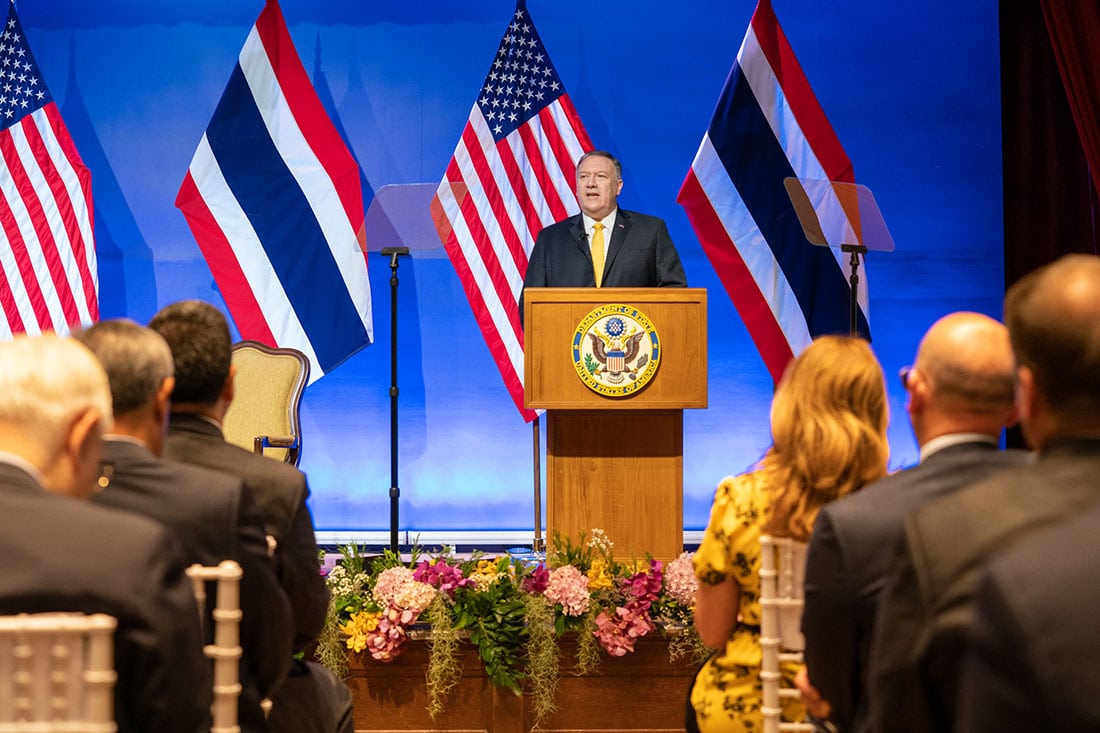
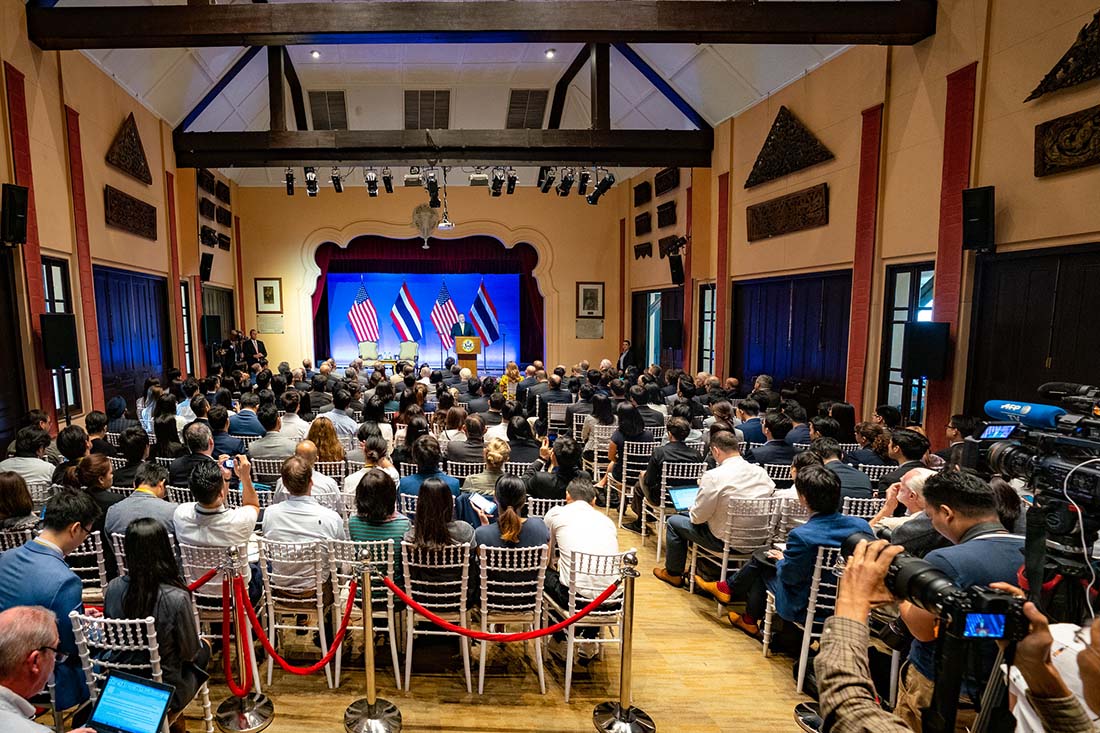
Speaking to a packed house at the Siam Society on August 1, in the heart of Bangkok, Pompeo said the United States cherishes its 200-year relationship with Thailand, although America has sometimes appeared to forget the importance of these bilateral ties, and others, “who don’t have our mutual best interests at heart,” have attempted to exploit the situation when the relationship seemed to cool.
U.S. secretary of state Michael R. Pompeo delivers a speech,”The U.S. in Asia: Economic Engagement for Good,” in Bangkok, Thailand, on August 2, 2019. Photo: Ron Przysucha / U.S. State Department.
Though Pompeo did not mention China by name, Beijing was on many people’s minds during the week-long meeting. In the last five years, under the military government of Prime Minister Prayut Chan-ocha, Thailand has turned to China for military hardware, including submarines and armored personnel carriers. But Kavi Chongkittavorn, a senior fellow at the Institute of Security and International Studies, a Thai think tank, says Thailand was merely looking after itself. “In reality, Thailand is for Thailand,” Kavi said.
Moreover, if the past five years saw a boost in Thai-Chinese defense ties, a retrenchment may be imminent. According to recent reports, the United States has just approved the sale of 60 Stryker armored personnel carriers to Thailand. Although this is just a fraction of what Thailand spent on Chinese military hardware, said Kavi, it makes Thailand the first non-U.S. user of the wheeled infantry vehicles.
While the United States condemned Thailand’s 2014 military coup and halted U.S. military aid to the Prayut government, Washington has been seeking warmer ties with Bangkok since as far back as February 2016, when President Barack Obama met Prayut on the side of an ASEAN summit in California. Prayut also visited President Donald Trump in the Oval Office in October 2017. General elections in March returned Prayut as the country’s prime minister, and in his speech Pompeo commended “our Thai friends for returning to the democratic fold.”
Pompeo held a brief side meeting with his Chinese counterpart, Foreign Minister Wang Yi. Both played down the rift between the two countries, with Wang describing the meeting as “deep communication” that “helped to increase our mutual understanding,” while Pompeo stated, “when it advances U.S. interests, we are ready to cooperate with China.”
Although Pompeo did not call on Thailand or other Southeast Asian nations to pick sides, insisting that U.S. engagement in the region is not a “zero-sum game,” he urged Australia, where he travelled from Bangkok, to stand up to what he considered to be China’s unfair trade practices and its militarization of the South China Sea.
Photo: Ron Przysucha / U.S. State Department.
Southeast Asia’s growing prosperity was not preordained, he said; it came about because of political freedom and free trade, and he reminded the audience that key shipping lanes in the Indo-Pacific region are protected by American sailors. “We want a free and open Indo-Pacific that’s marked by the core tenets of the rule of law, of openness, of transparency, of good governance, of respect for sovereignty of each and every nation, true partnerships,” Pompeo said.
Speaking at the Siam Society, Pompeo stressed the compatibility between American principles and Asian prosperity and pointed to the “solid partnership” with Thailand as a win-win proposition. He cited a working-class Thai couple who in 2006 transformed their small chicken farm into an enterprise that generates $78,000 monthly after they partnered with Cargill, an American company that has been in Thailand since 1968.
“[Cargill] worked with the family to improve productivity, to improve efficiency, to help them with management techniques. That partnership with America worked out pretty darn well,” Pompeo said. “And when they’re ready to grow further, they know they have a solid partner in that great American business.”
The formula is simple, said Pompeo: “property rights, the rule of law, lower taxes, an overall lighter touch from government regulation.” Governments in the region may have been instrumental in creating “national champion” companies, he argued, but state-led growth can only go so far, “because in the end, human flourishing only really blossoms when governments step back.”
That formula, said Pompeo, has created homegrown giants like Samsung, Honda, Taiwan Semiconductor, Mahindra & Mahindra, and many others. “And the United States was there. It was there with you all the way, and it will be, helping you grow and forging ever-closer ties. We built APEC, we built ASEAN and the Lower Mekong Initiative, and we did so with you, alongside of you,” Pompeo said.
“Importantly, too, we invested in your human capital. Our educational programs and universities have nurtured thousands of Asian leaders for decades, from local leaders to heads of state,” he added.
Pompeo said more than 4,200 American companies operate within ASEAN, investing over a trillion dollars in the region. “There is no other country anywhere that even comes close.”
But for former Thai ambassador Kobsak Chutikul, the specific details of U.S. investments in Thailand and the region did not bring greater clarity on America’s Indo-Pacific strategy. “Is it to be a new web of economic and trading arrangements, a defense-oriented alliance system, or a loose network of like-minded partners to counter the rise of China? And does the situation call for a Cold War clarity and new architecture?” Kobsak asked.
Kobsak said there was widespread uneasiness in the region, as reflected in the series of bilateral meetings on the sidelines in Bangkok between ministers who were trying to address new and ongoing bilateral disputes. “Deep down, people in the region quietly admire President Trump for standing up forcefully to China. But at the same time, they are not sure about the strength of American commitment to other countries that might choose to openly stand with the U.S.”
Pompeo’s visit to Bangkok came on the day that President Trump announced a new 10 percent tariff on an additional $300 billion worth of Chinese imports, adding to the existing 25 percent tariff on $250 billion of imports already in effect.
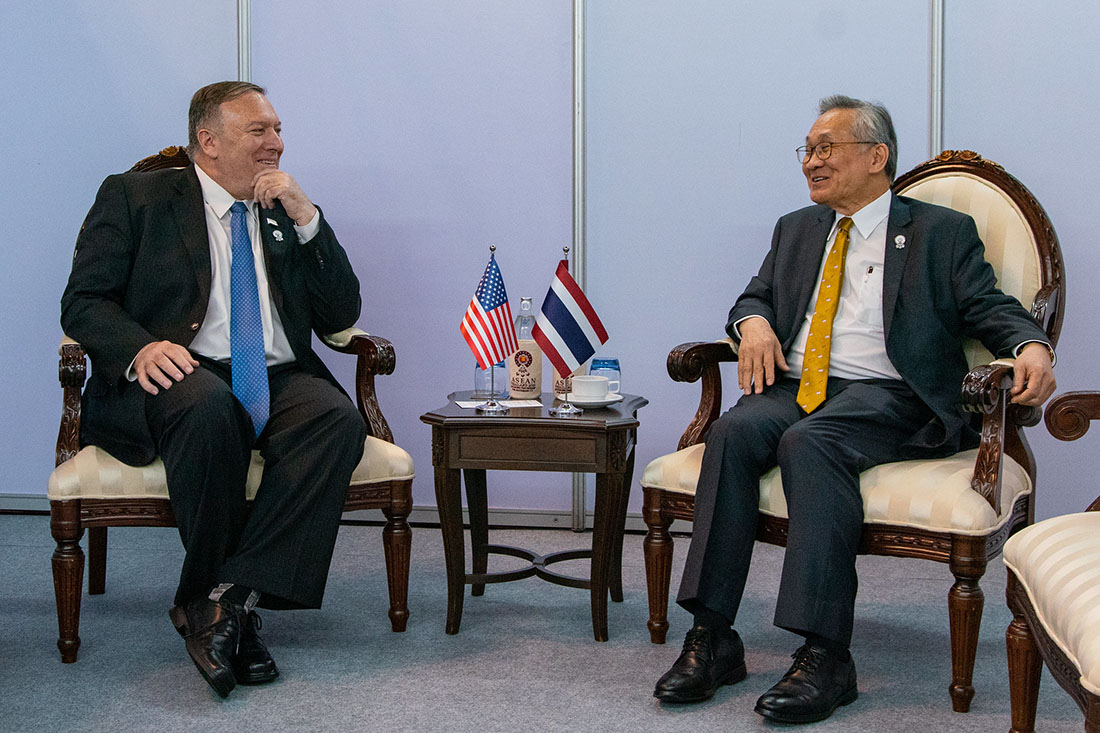
U.S. secretary of state Michael R. Pompeo meets with Thai foreign minister Don Pramudwinai at the Centara Grand in Bangkok, Thailand on August 1, 2019. Photo: Ron Przysucha / U.S. State Department.
During the question-and-answer session with Bloomberg’s Haslinda Amin, Pompeo urged China to return to an earlier agreement that he believes could provide the basis for a settlement between the two sides. “We want fairness, evenness, reciprocity. These are core concepts. They’re what I spoke about. And when that happens, Asia will thrive, Southeast Asia will thrive, the United States global trading system will thrive,” Pompeo said. “But it cannot be the case that a nation uses protectionism to protect its own goods and uses predatory tactics to deny others’ economies the chances to grow,” he added.
Pompeo praised China for its role in trying to convince North Korea to give up its nuclear weapons program and dismissed suggestions that Washington has not been tough enough on Pyongyang. He expressed “regret” that his North Korean counterpart did not attend the annual ASEAN meetings in Bangkok, but he said he was optimistic at the possibility of fresh discussions in the future.
Participants at the Siam Society event included members of the diplomatic community and business leaders. Most noticeable was a group of alumni from the Young Southeast Asian Leaders Initiative, a U.S.-funded project that promotes civic engagement and education for youth from the region.
Don Pathan is senior program officer for regional security cooperation for The Asia Foundation in Thailand. He can be reached at don.pathan@asiafoundation.org. The views and opinions expressed here are those of the author, not those of The Asia Foundation.

https://asiafoundation.org/2019/08/14/pompeo-to-asean-the-u-s-is-committed/